It was theorized that Stalker had suffered serious losses earlier in Bombay races in 1856 and was facing a severe financial crisis.
Analyzing Quixotic and Myopic views of so called leading western analysts about the USA and NATO failure in Afghanistan https://www.amazon.com/dp/B09TN493BV/ref=cm_sw_r_tw_dp_R8Y2HQVS7XAPRG21V004 via @amazon
Theo Farrell's Book "Unwinnable" Critically Examined and Reviewed by Agha H A... https://www.amazon.com/dp/B09TRKYVF5/ref=cm_sw_r_tw_dp_TGSBDJDA275QA41FVC7K via @amazon
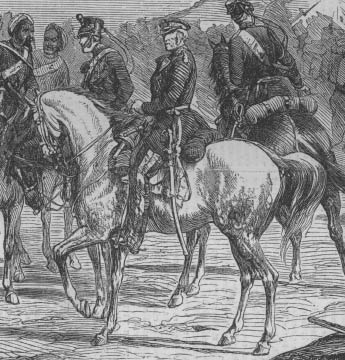
It was theorized that Stalker had suffered serious losses earlier in Bombay races in 1856 and was facing a severe financial crisis.
It was theorized that Stalker had suffered serious losses earlier in Bombay races in 1856 and was facing a severe financial crisis.
http://www.amazon.com/When-English-India-Company-Defeated/dp/1500799122/ref=sr_1_1?s=books&ie=UTF8&qid=1444489565&sr=1-1&keywords=when+an+english+company+defeated+iran%2C+amin
Persian Campaign of 1856-57 was a brilliant campaign were a private company English East Indian Company using naval power defeated Persia with a predominantly Indian force.
In October 1856 a Persian army occupied Herat in Afghanistan practically a vassal state of English East India Company since 1849.
Herat was located on the historic southern invasion route from Afghanistan to India and English East India Companys viceroy Canning in India felt that this Iranian move must be contested.
An overland attack on Iran required exorbitantly expensive logistics so it was decided that a seaborne attack be mounted on Iran.
English East India Company Attacks Persia
Prime force used was English East India Companys Bombay Army.
Order of battle of companys force under command Major General Forest Stalker was as below:--
- M. 64th Foot, Lt-Colonel J. Draper
- 2nd Bombay European Light Infantry, Lt-Colonel J.S. Ramsey
- 2nd Balooch Battalion, Captain L.S. Hough
- 4th Bombay Native Infantry, Lt-Colonel R.W. Honner
- 20th Bombay Native Infantry, Lt-Colonel A. Shepheard
- 3rd Bombay Native Cavalry (2 Squadrons), Major J. Forbes
- Poona Horse (1 Squadron), Lt-Colonel T. Tapp
- 3rd Light Field Battery (1ST Company 1st Battalionn Bombay Artillery), Captain S. Hatch
- 5th Light Field Battery (4th Company 1st Battalion Bombay Artillery), Captain H.L. Gibbard
- 3rd Troop Bombay Horse Artillery, Captain E.S. Blake
- 2nd Company Bombay Sappers & Miners, Captain C.T. Haig
- 4th Company Bombay Sappers & Miners, Captain J. Le Mesurier
Rashire Fort an old Dutch fort was assaulted and captured on 9 December 1856.
It was here that first Victoria Cross in English East India Companys history was awarded to Captain J.A Wood of the private 20th Bombay Native Infantry battalion of the English East India Companys army.An Indian native officer known as JCO of same unit and an Indian soldier again same unit were also recommended for VC but not granted the honour as British racism of that time did not allow Indians to receive a VC at that time.Note that the VC had been instituted in 1856.
Brigadier J. Stopford was killed in the assault on Rashire Fort.
The same night Persian cavalry attacked Outrams force and a pitched battle took place the next day at Kooshab where Outram defeated Persian main army by masterly use of artillery and a brilliant cavalry charge by Poona Horse and 3rd Bombay Native Cavalry of company private army.
Colonel Jacob described Indian 3rd Light cavalrys charge on a Persian infantry hollow square as “the best cavalry performance of modern times”
Persians were defeated with 700 killed.
Companys losses were low , some 16 Europeans killed and similar number of Indians killed.
Outram recommended 10 persons of 3rd Bombay Native Light Cavalry Regiment for the Victoria Cross, but it was given only to Lieutenant A.T. Moore and Lieutenant J.G. Malcolmson.
It was now decided to deal with another Persian force which had assembled at a fort called Mohamerrah south of Basra.
Outram intended to leave Major General Stalker in command of troops at Bushehr and himself leave for Mohamerrah.
Major General Stalker committed suicide on 14 Marc 1857.
It was theorized that Stalker had suffered serious losses earlier in Bombay races in 1856 and was facing a severe financial crisis.
Another theory was that Stalker was depressed for having been superseded by Outram.
Yet another theory advanced by Colonel Jacob was that Stalker was a morally irresolute and a coward and
“on 15th March: General Stalker shot himself during the night in dread of the responsibility of being left to command at Bushire during the absence of Sir James Outram. “
Stalkers suicide was followed by a more inexplicable suicide of a fine naval officer Commodore Richard Ethersey squadron commander of Persian gulf squadron .In this case the reason ascribed was naval fatigue as result of excessively long service on the sea


Comments
Post a Comment
Only substantial and serious comments will be accepted .